
This year you will be spoiled for choice.

Code-named Pelican, bigger hatchback with new petrol and diesel engines may hit the road next year.

Amid better semiconductor chip supplies, the Indian automotive industry posted an 8 percent growth in production of vehicles across categories for the month of May, with three-wheelers (20 per cent) and passenger vehicles (16 per cent) leading the pack. Exports, however, dipped 21 per cent at an industry level. The industry also recorded its highest-ever May wholesales of domestic passenger vehicles (334,802 units), riding on high demand for sport utility vehicles (SUVs) and better supplies of semiconductor chips.

India is sceptical that Tesla might import into the country cars made in China. Tesla executives were in India last month and appear to have proposed a factory in the country. But do not be surprised if that does not happen in a hurry.

India's first home-grown mapping company MapMyIndia is looking to list in the public market by raising around Rs 1,200 crore at a Rs 6,000-crore valuation. Sources said the company is ready with its draft red herring prospectus documents and is likely to file as early as next week. While the money will be used for business expansion, it will also give MapMyIndia's early investors, including Qualcomm, PhonePe, and Japanese mapmaker Zenrin Co., a chance to exit. The Verma family, which founded the company, will continue to remain promoters.

The company has already received bookings for 33,000 units so far.

The compact segment where Sonet will be launched is crowded with the Maruti Vitara and Brezza, which top the sales' list, and a bevy of models from Mahindra & Mahindra apart from Hyundai's offering. But volumes in this are slightly higher than those in the mid-segment, making it attractive, says Surajeet Das Gupta.

While Maruti leads with 30% volume growth, Hyundai sold 18,337 vehicles in rural markets during April-June

Auto experts from CarJasoos answer all your questions related to buying, selling or maintenance of new cars.

Dealers across brands are slashing prices by Rs 20,000 to over Rs 1 lakh, depending on the car model.
How does the new i10 variant fare when pitted against Nissan Micra, Maruti Swift and Etios Liva?

Top 10 vehicles, value-wise, is dominated by the two players in the market, Maruti Suzuki & Hyundai

India's largest carmaker Maruti Suzuki India tightened its grip in terms of best selling cars with six of its models featuring in the top-10 list for the just concluded fiscal.
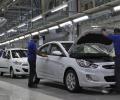
As the second wave of the Covid-19 pandemic abates, India's automakers are hopeful of a quick recovery in sales volumes, led by better rural sentiment, low interest rates, improved availability of finance and a gradual uptick in business and economic activity. In fact, companies have started to ramp up production already, encouraged by high order books and the growing preference for private transport in both rural and urban areas as a means to avoid infections. In early April, the industry had been bullish as the sales trend for March showed that the effects of the Covid-19 pandemic had been left behind. The total vehicle sales had grown by 77 per cent, albeit on a lower base, and for the past few months, sales had consistently touched 300,000 units per month.
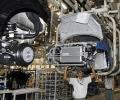
Hyundai Motor and Toyota Kirloskar Motor have announced the suspension of manufacturing operations at their respective plants amid coronavirus outbreak. On Sunday, various automakers like Maruti Suzuki India, Honda Cars, Mahindra & Mahindra and Fiat announced a temporary halt in manufacturing operations at their respective facilities.

Close to half a dozen more three-row premium mid-size models are expected to hit the road over the next two years.

The Virtus is indeed designed to look, act and behave like a well-built European sedan that swims in the segment between the compact sedan VW Vento and the larger Passat, says Pavan Lall.

The muted expectation of dealers come at a time when vehicle manufacturers such as Maruti Suzuki, Hyundai Motor, Mahindra & Mahindra and others reported a double-digit fall in wholesale dispatches to dealerships in July and August.
Leading carmakers Maruti Suzuki, Hyundai and Tata Motors reported robust dispatches to dealers in May on the back of strong demand for passenger vehicles across regions, even as the global semiconductor shortage continued to impact production. Mahindra & Mahindra, Kia India, Toyota Kirloskar Motor, Honda Cars and Skoda also witnessed strong demand for their models last month. The month of May also witnessed Tata Motors race ahead of Hyundai in terms of domestic wholesales.
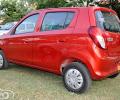
It's Maruti all the way, with four out of top five coming from its stable.

Automobile retail sales in India rose 11 per cent in September as better supplies from manufacturers enabled dealers to ramp up customer deliveries amid the ongoing festive period, Federation Of Automobile Dealers Associations said on Tuesday. Last month, total retail sales stood at 14,64,001 units as compared to 13,19,647 units in September 2021. FADA noted that October is expected to witness even better overall sales due to the festive season further gathering steam.
The car will be priced aggressively compared to its rivals.
Passenger vehicle dispatches from factories to dealers in India fell 8 per cent in January, mainly due to semiconductor shortage, auto industry body SIAM said on Friday. The total passenger vehicle wholesales dropped to 254,287 units in January 2022 as compared to 276,554 units in the same month of last year. Last month, passenger car dispatches stood at 126,693 units as compared to 153,244 units in the year-ago period. Similarly, van dispatches declined to 10,632 units in the period under review from 11,816 units in January 2021.

With the threat of a third Covid-19 wave looming large, companies are scrambling to protect employees and keep operations safe--from a no-jab-no-entry-at-workplace policy to ramping up vaccination, it's an all-out effort to prevent the scale of devastation seen in the first two waves. At least two top steel companies--Tata Steel and ArcelorMittal Nippon Steel India (AM/NS India)--are pushing for vaccination certificates for entry into work premises. AM/NS India, a joint venture between world's leading steelmaker, ArcelorMittal, and Japan's Nippon Steel, is set to make vaccination the certificate a requirement from July 1.

Market leaders saw good traction for new cars, including the electric ones.
Carmakers Mercedes-Benz, Audi, Renault, Kia India and MG Motor on Wednesday announced plans to hike vehicle prices from January to partially offset the impact of rising input costs. They join the likes of market leader Maruti Suzuki India and Tata Motors, which have also made the year-end announcements to raise prices from next month. Audi India said it will increase prices of its entire model range by up to 1.7 per cent, while Mercedes-Benz India noted it will hike the prices by up to 5 per cent from January 1.

It has been a more than interesting and definitely an exciting last season with the battle of supremacy raging on between automakers.

Companies are using additional service workforce and offering part waivers on charges to affected car owners.
Demand rising for Maruti Celerio, Honda City, Hyundai Xcent, Nissan Terrano and Datsun Go, most of which were launched in 2014.
The strike, however, had no impact on production of auto majors Maruti Suzuki India, Hero MotoCorp, Honda Cars India, Mahindra & Mahindra, Tata Motors and Hyundai Motors India as their plants in various parts of the country functioned normally.

Ahead of the peak festive season, India's passenger vehicle makers are staring at a cumulative order backlog of nearly 500,000 units as chip shortage continues to cripple production. The crisis is forcing companies to change their production plans frequently and take a call on the variants they can manufacture based on the availability of semiconductors. The booking numbers are not a true reflection of demand, said manufacturers.
Maruti Suzuki and Hyundai would make the largest gain.
Amid a shift in mobility trends and people increasingly opting for less polluting energy sources, sales of compressed natural gas (CNG) vehicles increased more than 82 per cent in the past five years. A total of 729,902 CNG vehicles were sold in 2022-23 against 400,825 in 2017-18, according to VAHAN Dashboard. Though the increase in sales of CNG-powered vehicles has been significant, their share in overall vehicle sales remains minuscule as is the case with EVs.

For Mahindra & Mahindra (M&M), which has just started executing a comeback strategy for wresting back ground it lost to rivals, this could not have come at a worse time. The maker of the Bolero Neo and the Thar models on Thursday said it would have to halt production at its automotive plant for a week due to the worsening supply situation of semiconductors.

Innovation ranging from exterior designs of vehicles to EV charger locks grabbed eyeballs at the expo
The country's leading automakers Maruti Suzuki and Hyundai Motor reported a decline in dispatches to dealers in March as shortage of electronic components impacted production. On the other hand, Tata Motors, Skoda and Kia India posted their highest ever monthly wholesales last month. Toyota Kirloskar Motor said its dispatches in March were the highest in the last five years while Mahindra & Mahindra also reported a robust increase in its passenger vehicle dispatches in March.

With the new Verna, Hyundai takes on Honda. Beating the Honda City is something the country's second-largest car maker has taken upon itself with its new launch. Will it succeed?
When it comes to the replacement of old tyres with new ones, car owners are in a catch-22 situation, wondering about the tyre brand, price and most importantly, tyre warranty.

The models from Hyundai and Maruti, which might go on sale in October 2018 and February 2019, respectively, are set to revive a segment that had lost sheen to the compact SUV segment, lately

Supply chain constraints will keep plaguing automobile companies even though demand significantly improved resulting in a 13 per cent year-on-year (YoY) increase in sales in financial year 2021-22 (FY22). Executives at auto firms fear that the Russia-Ukraine war will further dent the sector's prospects of recovery as supply chains face more disruptions. "The visibility in the supply side is so hazy that it is difficult to give even one quarter projection. But all the parameters of demand like pending bookings and enquiries are increasing.
 © 2026 Rediff.com - Advertise with us - Disclaimer - Privacy Policy - Sitemap - Feedback - About us - Terms of use - Grievances